Pronghorn Migration Bottleneck Protected on the New Fork River
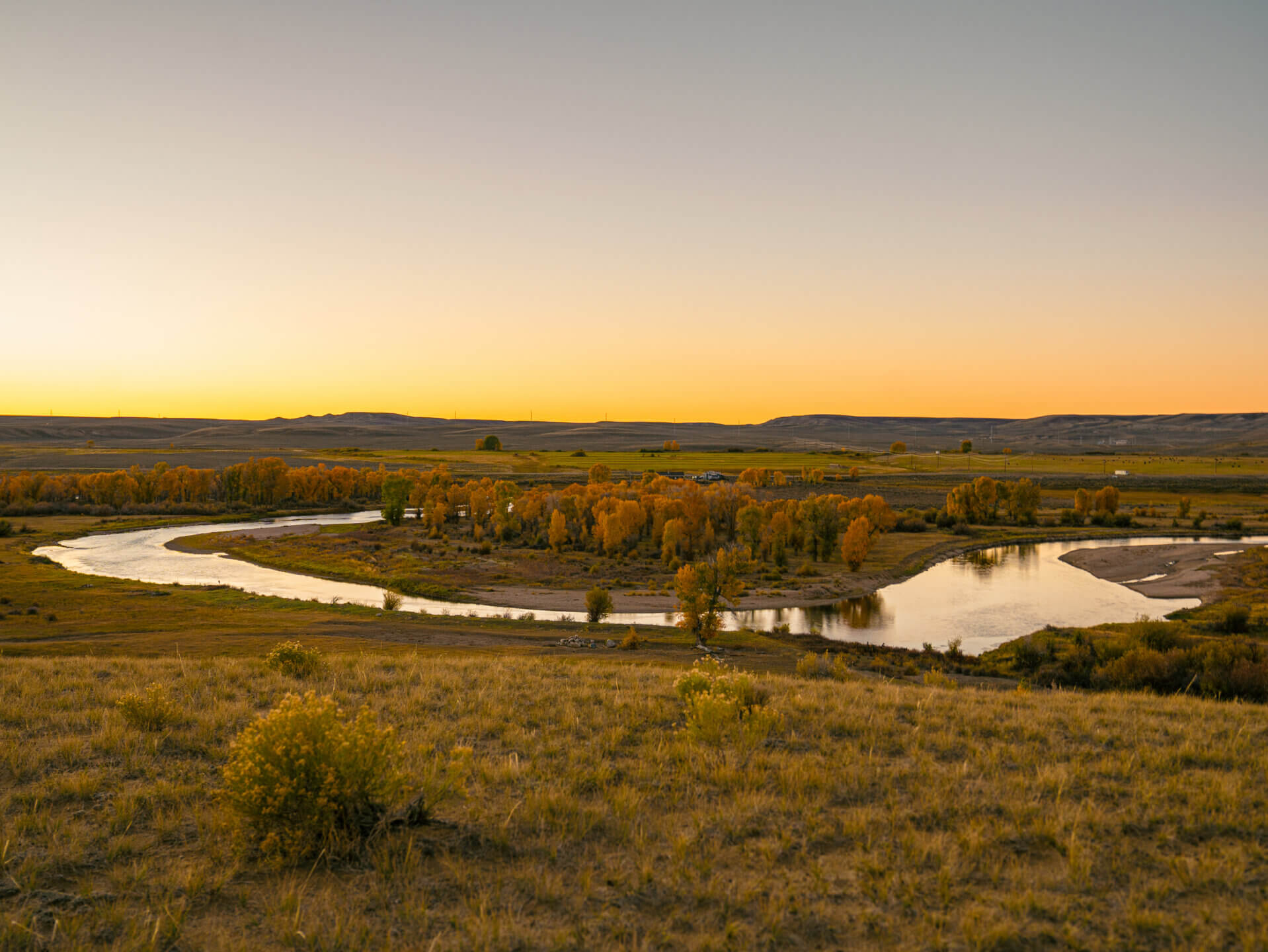
Southwest of Boulder, the New Fork River flows along the northern and western edges of Wild Horse Ranch, where wet hay meadows, cottonwood galleries, and sagebrush steppe make up a 233-acre working ranch. Its meadows have been hayed continuously for over 100 years, and each spring and fall, migrating pronghorn funnel down to the river on this same ground to cross its waters. Now, both will remain that way forever.
The Green River Valley Program (GRVP) of the Jackson Hole Land Trust is proud to announce that the Looney family has placed a permanent conservation easement on Wild Horse Ranch, a 233-acre working ranch located 7.5 miles southwest of Boulder along the New Fork River. The easement permanently protects irreplaceable agricultural land and wildlife habitat, including a critical pronghorn migration bottleneck.
“We were motivated to protect the wildlife that use the property. And we have no interest in developing the property, so it’s good that that’s not going to happen ever,” said landowner Mike Looney.
The entire ranch lies within the newly designated Sublette Pronghorn Migration Corridor, and the easement permanently protects a significant portion of the Sublette Pronghorn New Fork Migration Bottleneck. This bottleneck is a narrow crossing where migrating pronghorn naturally funnel down to the New Fork River to cross its waters during their spring and fall journeys along hundreds of miles from the Red Desert to Grand Teton National Park and back. Only 183 private acres sit within this bottleneck, and the easement protects 169 of them, keeping its entire width open where it crosses the ranch. The Wyoming Game and Fish Department’s 2025 Sublette Antelope Biological Risk and Opportunity Assessment identifies this stretch as the “heart” of the herd’s migration corridor and specifically recommends conservation easements here to limit habitat disturbance.
“The New Fork River is a really special place, and this conservation easement is one of the most significant land protection actions taken in this county in recent history,” said GRVP Director Kerry Schultz. “I can’t overstate the importance of this area for the movement of pronghorn antelope. This is where they cross; this is how they migrate. Without intact migration routes, pronghorn populations can’t bounce back from things like the harsh winter of 2022-23 and the pneumonia outbreak.”
The conservation easement also safeguards a critical connection point between extensive Bureau of Land Management lands and 640 acres of Wyoming state trust lands, forming a vital private link between public lands and pronghorn stopover areas on either side of the New Fork River.
The ranch encompasses a mosaic of upland sagebrush, wetland, riparian, and riverine habitats, and the New Fork River flows 1.3 miles along the property’s northern and western boundaries. The cottonwood galleries, willow stands, sagebrush steppe, and wet hay meadows provide important winter range for mule deer and crucial winter/yearlong range for moose. The southern portion of the property sits in the Daniel Sage-Grouse Core Area, providing vital seasonal habitat to Sublette County’s iconic bird.
Jill Randall, big game migration coordinator for the Wyoming Game and Fish Department, emphasized the value of this kind of protection:
“The Wyoming Game and Fish Department is grateful for the permanent protection of the pronghorn migration bottleneck by the Looney family,” said Randall. “Conservation easements are one of the most valuable tools for protecting private land and the agricultural and wildlife resources provided by landowners who share these values.”
Wild Horse Ranch is a working ranch with more than a century of agricultural heritage. The Looney family has owned the property for more than 40 years, and its meadows have been flood-irrigated under water rights dating to 1914, just 24 years after Wyoming statehood. Those meadows are leased to neighboring ranchers for hay production and periodic summer cattle grazing. The conservation easement ensures the ranch will remain a working agricultural landscape in perpetuity. Haying and grazing continue unchanged under the easement, which was structured to keep the operation viable.
The Wild Horse Ranch Conservation Easement was the first project funded by The WYldlife Fund’s new restricted endowment dedicated to pronghorn conservation in Wyoming. Rich Guenzel, who established the fund with his wife, Mary, in March 2024 out of concern for the growing challenges facing pronghorn, including severe winters, drought, and loss of habitat quality and connectivity, shared his reaction:
“This is truly fitting that The Pronghorn Fund’s first-ever grant goes to the Wild Horse Ranch Conservation Easement,” said Guenzel. “This conservation easement will help permanently protect a vital and vulnerable migration bottleneck on private lands within the Designated Migration Corridor.”
The conservation easement on Wild Horse Ranch was made possible through funding from The Bryant Foundation, Ducks Unlimited, Heart of the Rockies Initiative, the Knobloch Family Foundation, the North American Pronghorn Foundation, the Sublette County Sage-Grouse Local Working Group, The Pronghorn Fund of The WYldlife Fund, the Wyoming Governor’s Big Game License Coalition, and the Wyoming Wildlife and Natural Resource Trust.
Photo: Alexandra Munger