From Woven Wire to Wildlife-Friendly: The Highway 26 Fencing Project
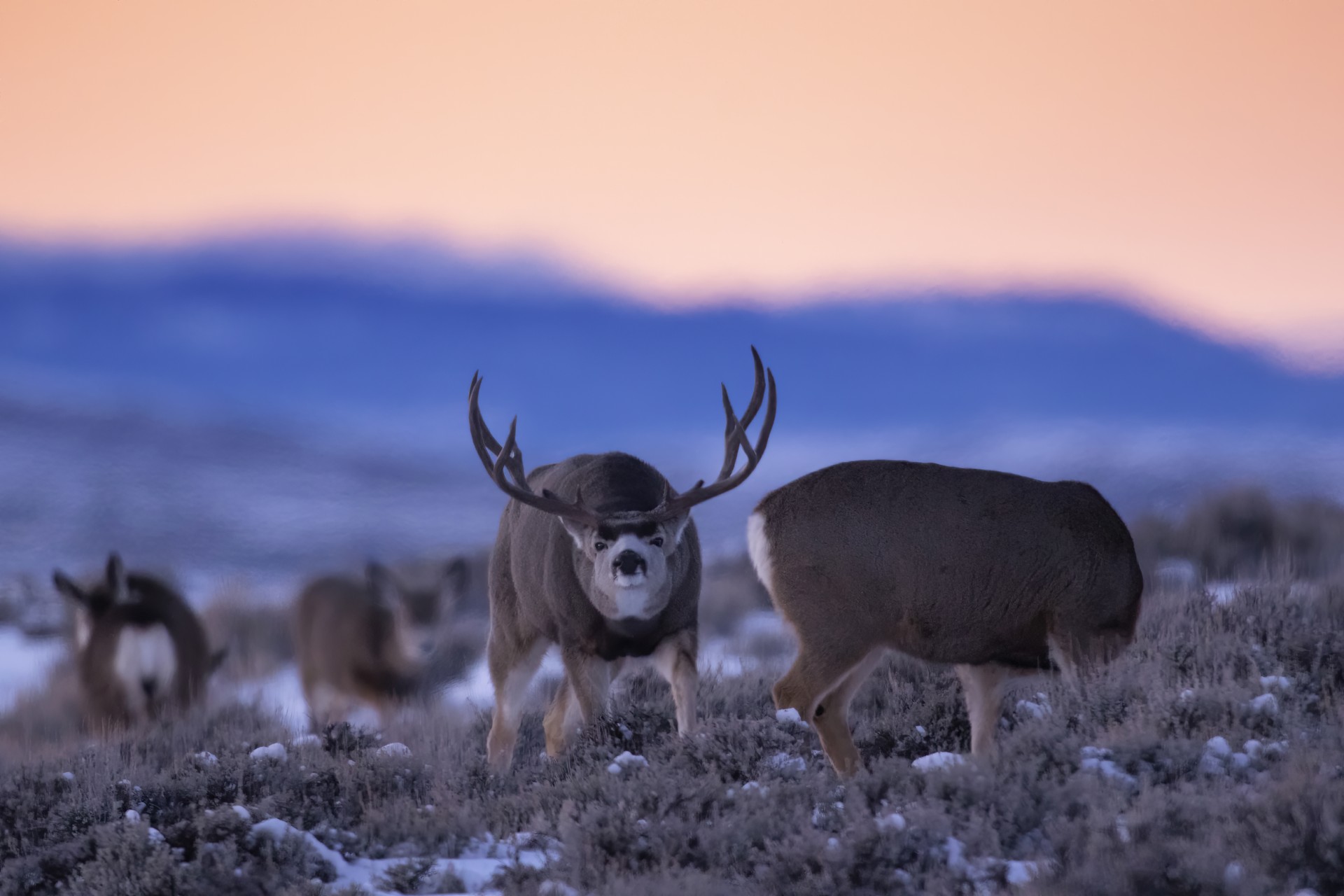
In Wyoming’s Upper Wind River Valley, a highway built along an old mule deer migration route has become one of the state’s deadliest roads for wildlife. A state biologist and a growing number of private landowners are changing how mule deer cross it, one mile of fence at a time.
Amy Anderson has come across more mule deer than she cares to count along Highway 26 west of Dubois. Some are tangled in wire. Others are lying dead on the shoulder. Cutting deer free of fences has become routine work for her crew.
The reason lies in the shape of the valley. Roads and animals both tend to take the easiest route through a landscape, and in the Upper Wind River Valley that route follows the Wind River. Mule deer traveled along the river between their summer and winter ranges long before Highway 26, the Wyoming Centennial Scenic Byway, arrived. When the road was built, it took the same valley floor, directly along a corridor the deer had used for generations.
The herds still migrate there. Now, though, reaching water and forage means repeatedly crossing the highway. They go down to the Wind River to drink, and use the irrigated hay meadows to feed and bed down. Because the Upper Wind River Valley is also their crucial winter range, the deer spend much of the year within sight of the road. According to the Wyoming Game and Fish Department (WGFD), mule deer account for roughly 85% of wildlife–vehicle collisions in Dubois. This corridor ranks among the most lethal stretches of highway in Wyoming. The fences that line Highway 26 continue to make the problem worse.
Anderson has spent 19 years with WGFD, the last 12 as the Lander region’s terrestrial habitat biologist. Much of that time has gone into understanding where and how mule deer travel. One of her favorite parts of the job is watching them bound through aspen stands, not pulling them out of fences.
The fencing problem has historical roots. Dubois was built on sheep ranching, and much of the fencing near the highway is woven wire, some installed in the 1940s. Adult deer can usually clear it, but fawns often can’t get over or through. Herds end up split on either side of the fence, with does and fawns lingering along a busy road, arguably the worst place for deer and drivers alike.
Anderson’s Highway 26 Fencing Project aims to fix that. Working with private landowners west of Dubois, her team is replacing woven wire with a wildlife-friendly design that is as visible as possible and easy for animals to get over or under. The new fence uses four strands of wire: three barbed on top and a smooth one at the bottom. The top wire sits at about 42 inches, so adult deer are less likely to snag a leg mid-jump, and at least 12 inches separate the top two wires so legs don’t get twisted between them. Those changes should also reduce the hours Zach Gregory, fellow Lander WGFD wildlife biologist, spends cutting deer out of fences. Below the bottom wire, an 18-inch gap matters most for fawns. Instead of being stranded beside the road, they can slip underneath and stay with their mothers. The goal, in Anderson’s words, is “moving across, not lingering.” Deer that cross quickly and cleanly spend less time on the pavement, which makes the road safer for drivers.
Getting started was slow. Most of the land along the highway is privately owned, and for a long time Anderson spent her days just working out who owned it. She hunted for contact details and followed word-of-mouth leads. Even then, few landowners signed up. She doesn’t sugarcoat it: Recruitment was a real challenge.
Two things changed that. About a year ago, a local contractor who lives on Highway 26 joined the effort. Anderson calls his involvement “life-changing” for the project. Then neighbors started watching the new fence go up next door. Today, people pull over on the highway to ask how they can get a shiny new fence of their own.
In 2025, its first year, the project converted 4.5 miles of fence. Another 1.5 miles are scheduled for fall 2026, and 3 more miles are planned for 2028, bringing the total to 9 miles.
Landowners sometimes worry that livestock and dogs will slip through the new fence design. Anderson points out that it is probably the most common right-of-way fence in Wyoming. “If it were honestly a problem,” she says, “Wyoming’s roads would be littered with calves and foals.” Landowners who partner with WGFD receive a new fence at no cost, sometimes replacing one that has stood for more than 80 years. In return, they help deer move safely across the valley and reduce the number killed on the road.
Wire is not the only fix headed for this stretch of road. WYGF, Wyoming Department of Transportation (WYDOT), and Tribes have plans for wildlife crossings on Highway 26 near Dubois: a series of overpasses and underpasses, better use of existing culverts, and tall fencing to funnel animals toward them. The design targets the deadliest weeks of the year, late September through November and again in spring, when the herd is on the move. The project is competing for federal funding through the Wildlife Crossings Pilot Program, with private partners, including the WYLDlife Fund and the Nature Conservancy, helping to cover the required match.
These initiatives are just pieces of the puzzle keeping the migration corridor open. Development and subdivision are steadily breaking up the valley floor that mule deer and other forms of wildlife depend on. Wind River Program conservation easements are another piece keeping open space intact and working lands in agricultural production. In Dubois, Anderson says, the community has embraced the work.
Anderson’s advice to landowners across Fremont County comes down to one idea: coexistence, learning to live alongside wildlife. She hears regularly from people dealing with wildlife damage on their property, and she doesn’t pretend the balance is easy. Along Highway 26, though, coexistence is starting to look like something concrete: a lowered top wire, an open gap at the bottom, and a doe and fawn crossing swiftly without collision.
Find out more about these fencing initiatives:
- US Highway 26 Wildlife Mitigation Strategy
- Wildlife Crossings Pilot Program | FHWA
- Dubois US 26 Wildlife Crossing – The WYldlife Fund
Photo: Mark Gocke