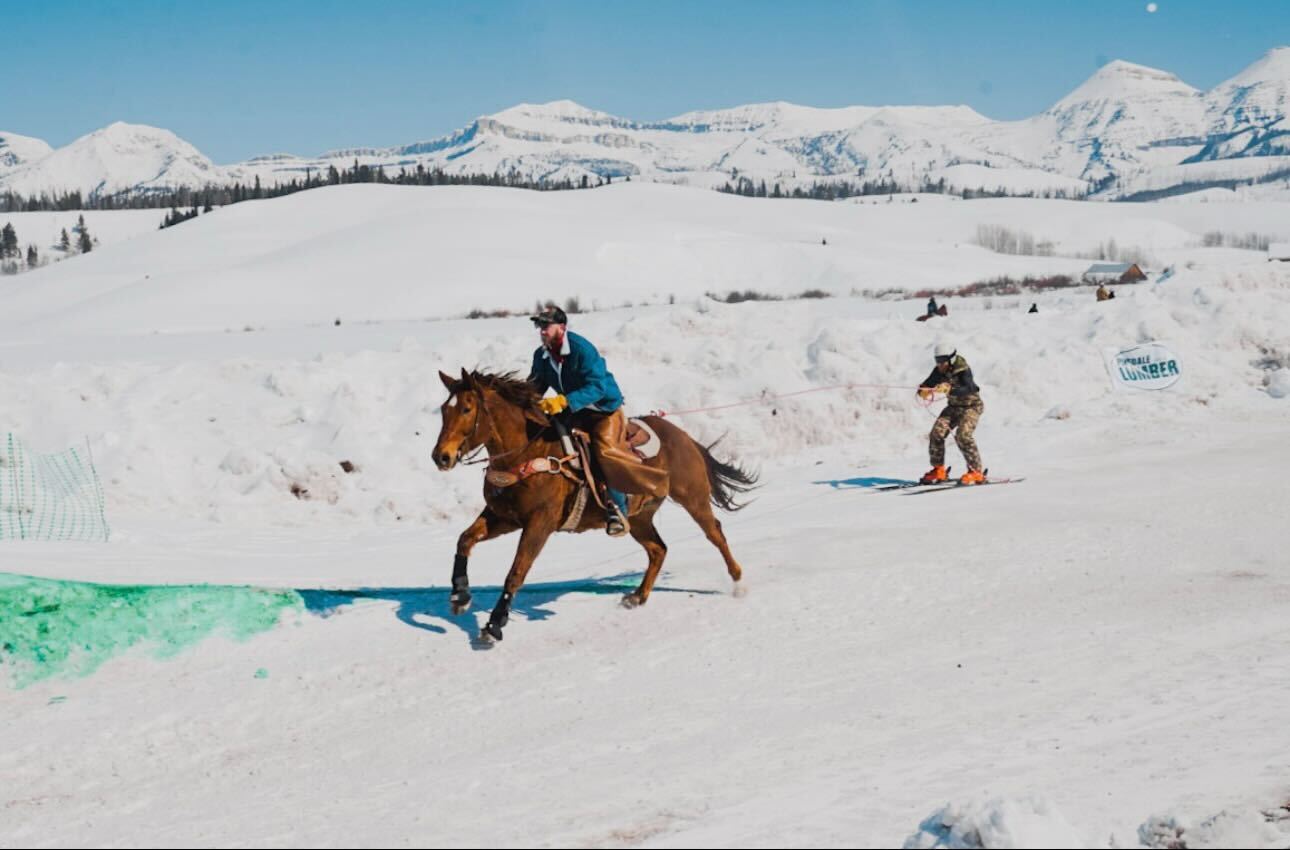
Where Ranch Traditions Meet Ski Culture: Skijoring in Sublette County
Skijoring is more than a fast-paced winter sport in Sublette County — it’s a joyful mix of ranch culture, ski culture, and the agricultural traditions that shape life here. According to Skijor International, the word skijoring comes from the Norwegian snørekjøring, meaning “ski driving,” and dates back hundreds of years to Scandinavia, where skiers were pulled by reindeer as a practical way to travel across snow-covered landscapes. Long before gates, jumps, and cheering crowds, skijoring was simply about getting through winter and getting work done.
That working-land spirit is alive and well in Sublette County today. Faith Hamlin of Little Jennie Skijor sees skijoring as a natural bridge between communities. “It’s a fun social event in our community where even working ranchers can come together before the busy calving time,” says Hamlin. “Ideally, ranch skijor is a place where folks can connect with a working ranch when they normally wouldn’t in their everyday lives, and also a place where our local Sublette County community, especially ranchers, can gather together.”
Sublette County has all the right ingredients for great skijoring: skilled riders, daring skiers, and long winters that demand a bit of creativity. “When you’re too old to rodeo, it’s something to do in winter. We’ve been doing it for years and years,” says John Hyde of Western Skies Skijoring, who organizes skijor events across the West and is a familiar sight in his pink shirt at the Steele Ranch skijor in Boulder — worn in honor of his mother’s battle with breast cancer. “The atmosphere is great. Everybody’s there to have fun.”
“Cowboys and skiers don’t really mix,” Hyde adds, “but by golly, they mix when it’s time to skijor.” Each team, comprised of a horse, rider, and skier, relies on timing, trust, and horsemanship. Horse and rider thunder down a snowy track, towing a skier who manages rope slack, clears jumps, and snags rings. It takes grit and courage, but skijoring is about more than racing. “Winning a gold buckle is great,” says Hyde, “but it’s the people you meet and the places you go. The love of animals and the love of the outdoors is something you have to keep going — if you don’t, you won’t have it anymore.”
Skijoring fits neatly into the rhythms of ranch life. Events take place during a quieter season, when livestock is home, and winter sets a different pace. At the Steele Ranch, the stretch of ground cleared for skijoring later becomes the calving area — a seamless transition from winter sport to spring work and the next generation of cattle.
The skills on display mirror everyday ranch life: a rider’s ability to handle a horse in winter conditions, a skier’s strength and bravery, and a shared resilience — paired with a healthy dose of humor. “The team names are often tongue-in-cheek,” says Hamlin. Favorites include “Ski Biscuit,” “Mane Attraction,” and “50 Shades of Neigh.” Hyde proudly competes as part of the “Geritol Kings” and even created the Century Class, where the rider’s and skier’s ages must add up to 100 years.
In Sublette County, skijoring brings people together and offers a welcoming way for agricultural families to share their way of life with the broader community. Here, skijoring isn’t just a sport — it’s a winter celebration of working lands, horsemanship, and the enduring connection between agriculture, community, and the landscape that sustains them.
Photo: Alexandra Munger