From One Generation to the Next
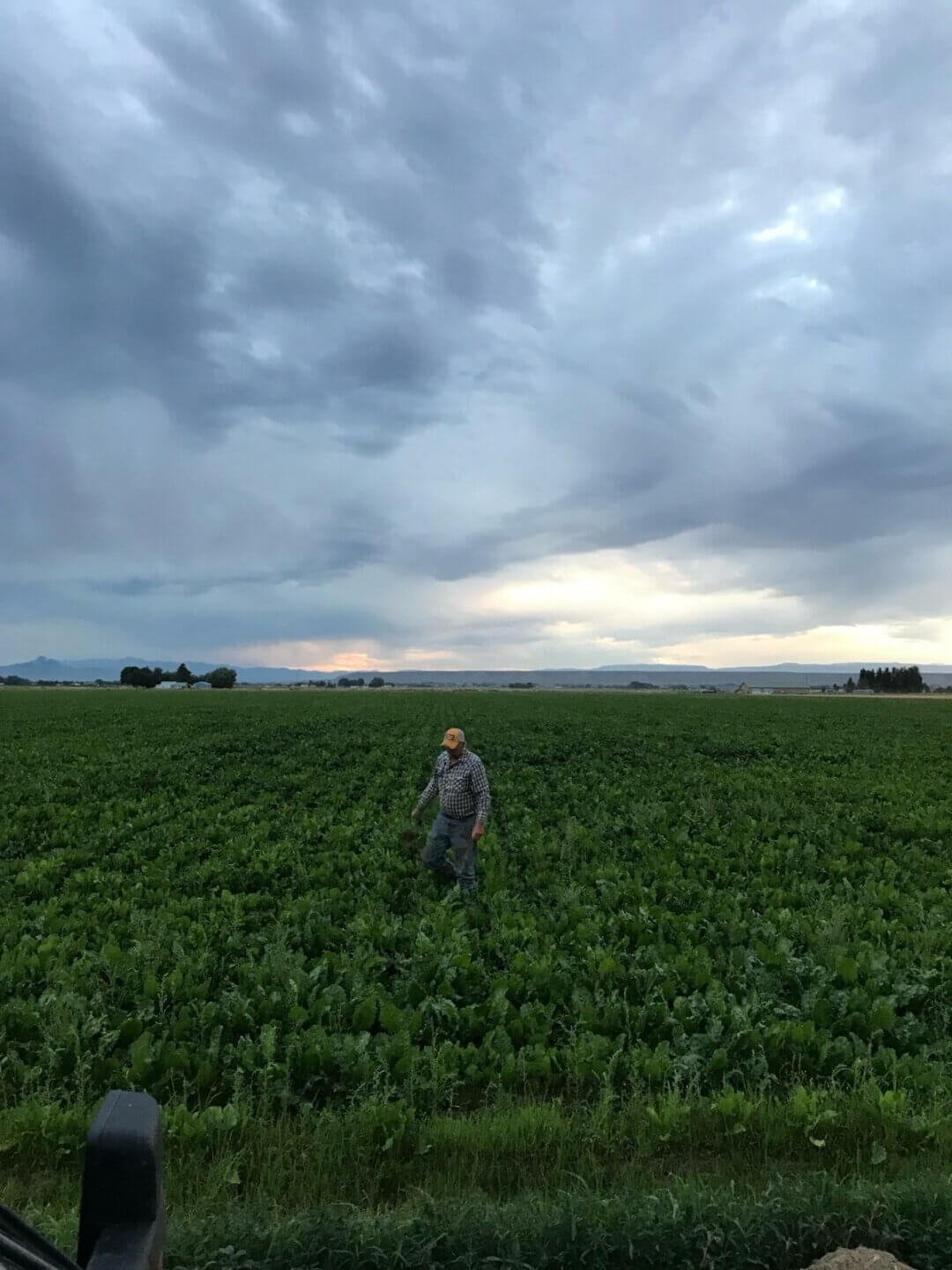
A fourth-generation farmer in the Powell Valley, it’s up to Regan Smith to create a plan for his farm to transfer to the fifth generation.
All around Park County, community members are seeing an increase in subdivisions and other farmland development. Park County is approaching an agricultural tipping point, where there would be irreversible damage to the local agricultural economy if farmland isn’t protected for farming. Without a strong agricultural base, Park County’s businesses that rely on agricultural production will suffer, creating a community-wide impact.
“We’re kind of fighting an uphill battle on these subdivisions. Until this land is worth more to me to produce sheep, cattle, sugar beets, and other crops than it is to plant houses, it is very difficult to stop subdivisions and the loss of open spaces,” Regan says.
One way to ensure agricultural land stays in agriculture is for farmers, ranchers, and landowners to create succession plans for the future of their operations. A succession plan goes beyond mere estate planning. Estate planning addresses what gets transferred: assets, equipment, and land. Succession planning addresses who will run the farm and how.
Regan is one of many Bighorn Basin farmers whose agricultural legacies are in their hands. Luckily, Regan was able to look to the previous generations to see how they handled the transfer of ownership of the farm.
In Regan’s family, the transition began when his father returned to the family farm after the war and began the farm transfer process with Regan’s grandmother. Regan’s parents and grandmother set a fixed purchase price for the farm in 1954 and paid Regan’s grandmother a crop share rent. In a crop share rent agreement, fertilizer costs and crop income are shared between the parties in a pre-determined ratio. For Regan’s parents, 10% of the crop rent was applied toward the principal of the purchase price.
Regan’s grandmother continued to hold the mortgage and pay the water and taxes, as she was receiving the crop rent from Regan’s parents. By 1980, when Regan’s grandmother passed away, his parents had paid around $200,000 in crop rent.
“It was good protection for my grandmother against inflation,” Regan recalls. By living off crop rent payments instead of investments, Regan’s grandmother was able to move off the farm and have enough money to live comfortably. When she passed away, a small balance remained on the purchase price, which Regan’s parents paid to his father’s four siblings.
With the payment plan successful on its first trial, Regan and his parents decided to replicate it when it was time for him to take over the farm.
Regan came back to the farm after graduating college in 1982. His parents were ready to start the transition process, so Regan and his parents agreed on a fixed purchase price for the land in 1984. He paid the crop rent until 2016 when his mother passed away, and he then inherited a third of what was left of the purchase price and settled the rest with his two brothers.
“My brothers and I sat down with my mother’s accountant, split up the remaining assets in my mother’s estate, and went hunting that afternoon. I mean, it wasn’t a big deal for us. But for some families, there are siblings who never speak to each other again. Which is very unfortunate,” Regan says.
Regan plans to do similarly with his son, who currently is earning 5 percent ownership of the machinery and livestock held in their LLC for each year he works. They have yet to set up a purchase agreement on the land, but plans to do so are on the horizon.
Regan has additional concerns with a special needs daughter. He wants the land he and his wife have accumulated to help care for her needs after they pass. He is confident that his family will make a plan sooner rather than later, and that her brothers will take good care of her.
“Farming has always been a way of life. Obviously, it must also be a successful business to be perpetuating,” Regan states.
Stewarding the land, raising crops, and contributing to the country’s food supply are all part of the agricultural way of life. Protecting it is more important than ever, which is why planning for the future of the farm by working thoughtfully and collaboratively across generations is critical. Agricultural producers interested in succession resources can reach out to the Park County Open Lands office to start protecting their legacy.
Photo: Wendy Smith